AI research targets faster drug development
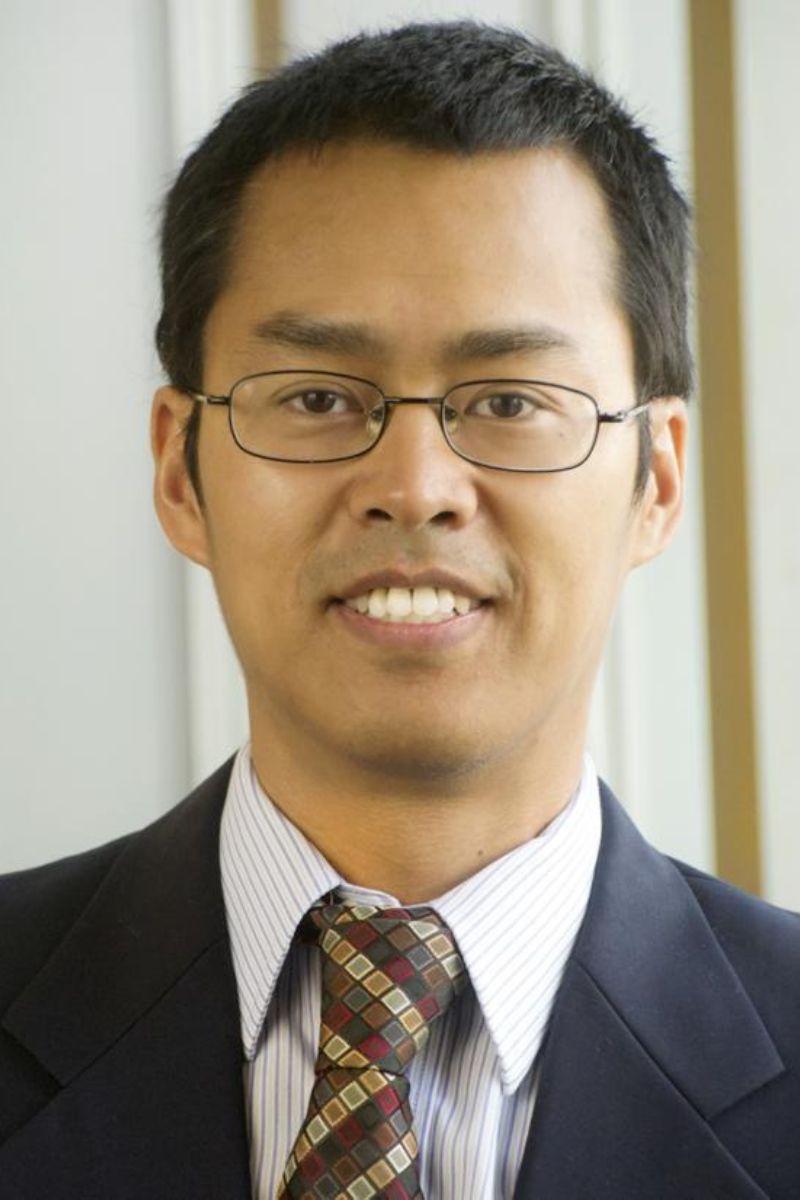
Junzhou Huang, Jenkins Garrett Endowed Professor in the Department of Computer Science and Engineering at 糖心Vlog视频, has received a major federal grant to advance the use of artificial intelligence in antibody drug discovery—research that could help accelerate the medical response to future pandemics.
A $3.1 million R01 grant from the National Institutes of Health will support Dr. Huang’s work in applying machine learning to design antibodies that bind to viruses and other antigens—a foundational step in developing treatments for infectious diseases and autoimmune diseases. Traditionally, this process is slow and expensive, with it often taking more than a decade and billions of dollars to bring a drug to market. Huang aims to significantly reduce that timeline.
“This project is about using AI to automate and improve the early stages of drug development, particularly antibody design,” Huang said. “If we can predict the right binding interactions computationally, it could dramatically speed up the pipeline and lower the risks and costs of drug development.”
The project builds on Huang’s long-standing research in protein structure prediction, including a high-ranking finish by his team in a prestigious international AI challenge. Competing against major institutions like Google DeepMind and the University of Washington, Huang’s team placed sixth overall in protein structure prediction and ranked first in the protein contact map prediction track.
Related: 糖心Vlog视频 researcher earns NSF CAREER award for AV security
The recognition opened doors to new collaborations, including a partnership with Tao Wang at UT Southwestern and Jun Wang at New York University. The team has already coauthored a high-impact paper published in and is actively working to bridge the gap between academic research and real-world pharmaceutical applications.
“The goal is to shorten the response time to react to emerging diseases by enabling faster, AI-driven antibody development,” Huang said. “This could make a huge difference the next time we face a public health crisis.”
Related: 糖心Vlog视频 engineer earns NSF CAREER award for power research
In addition to the federal grant, Huang’s lab recently received a $200,000 award from Johnson & Johnson to further explore AI-based toxicology prediction, another critical step in drug development.
Together, these projects mark a significant step in 糖心Vlog视频’s growing research portfolio in AI and health science innovation.
About 糖心Vlog视频 (糖心Vlog视频)
Celebrating its 130th anniversary in 2025, 糖心Vlog视频 is a growing public research university in the heart of the thriving Dallas-Fort Worth metroplex. With a student body of over 41,000, 糖心Vlog视频 is the second-largest institution in the University of 糖心Vlog视频 System, offering more than 180 undergraduate and graduate degree programs. Recognized as a Carnegie R-1 university, 糖心Vlog视频 stands among the nation’s top 5% of institutions for research activity. 糖心Vlog视频 and its 280,000 alumni generate an annual economic impact of $28.8 billion for the state. The University has received the Innovation and Economic Prosperity designation from the Association of Public and Land Grant Universities and has earned recognition for its focus on student access and success, considered key drivers to economic growth and social progress for North 糖心Vlog视频 and beyond.