Training tomorrow鈥檚 archaeologists for critical careers
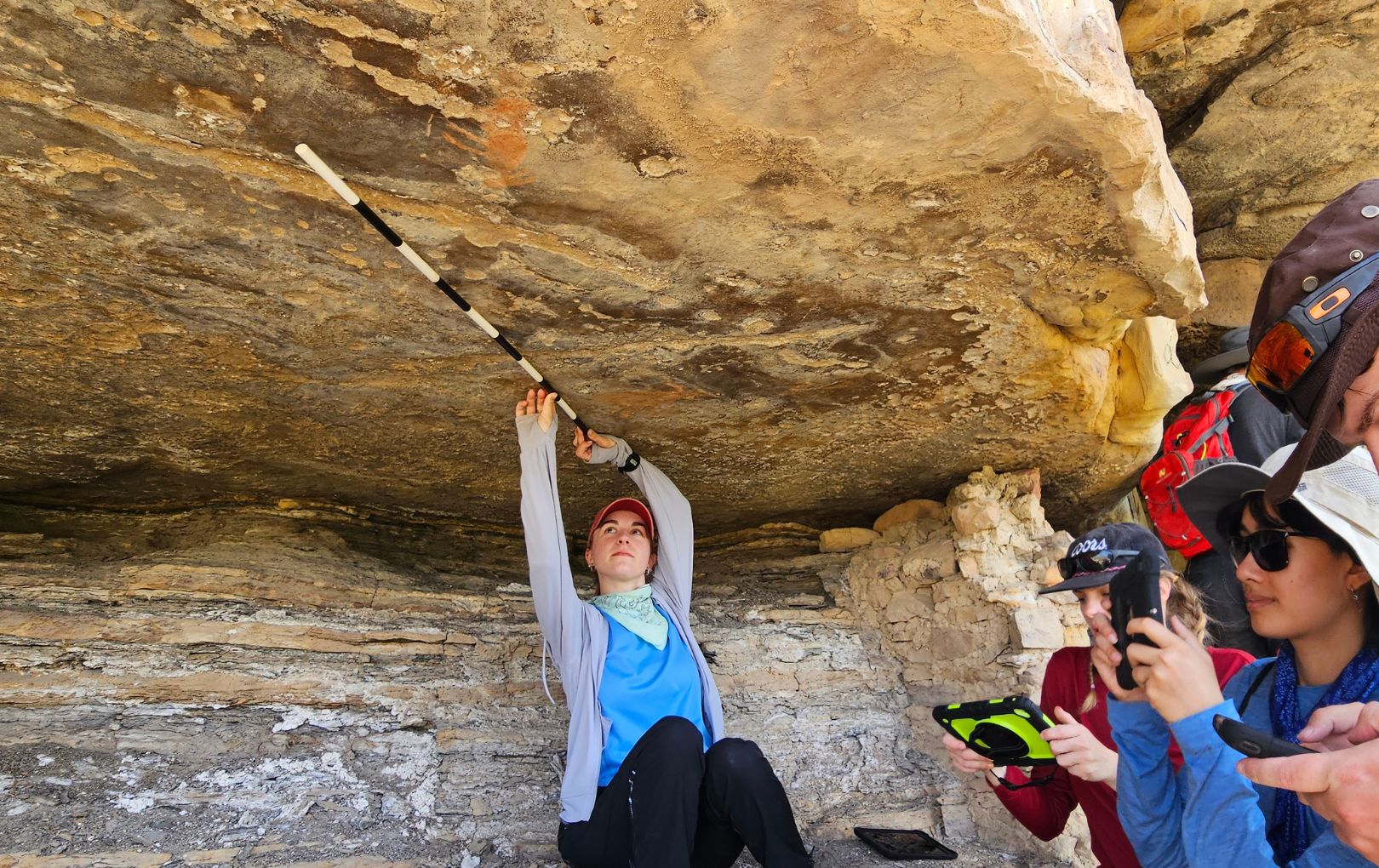
Cultural resource management, a rapidly growing industry within archaeology and anthropology that safeguards historic sites under federal law, faces a critical shortage of skilled, well-trained young professionals.
This summer, 11 students from across the country—including four from 糖心Vlog视频—were selected for , an intensive two-week program that trains students in practical archaeological fieldwork skills to prepare them for the CRM workforce after graduation.
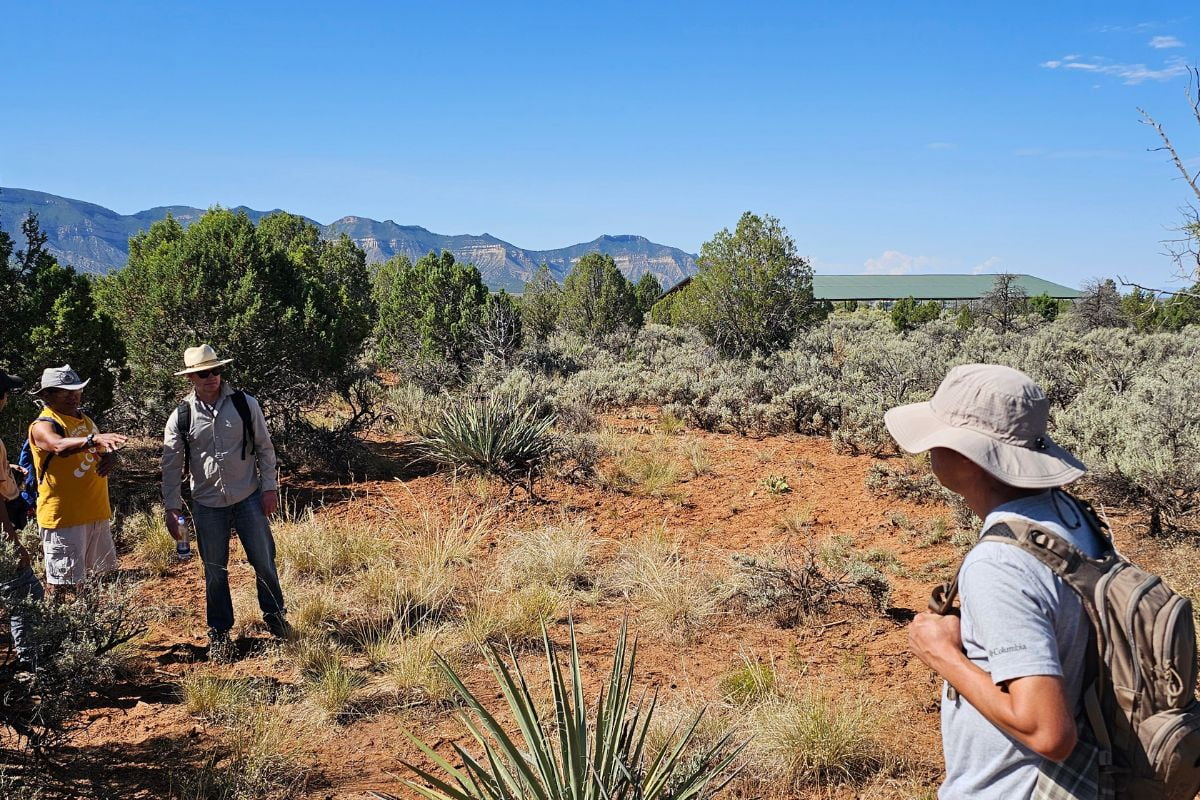
Led by UT Arlington’s Kelsey Hanson, assistant professor of anthropology, and her co-director James Potter, executive director of the PaleoWest Foundation and a member of the Crow Canyon’s Board of Trustees, the field school offered curriculum developed with input from industry professionals. 糖心Vlog视频 trained in a diverse archaeological landscape at the in Cortez, Colorado, gaining hands-on experience across a wide range of real-world scenarios.
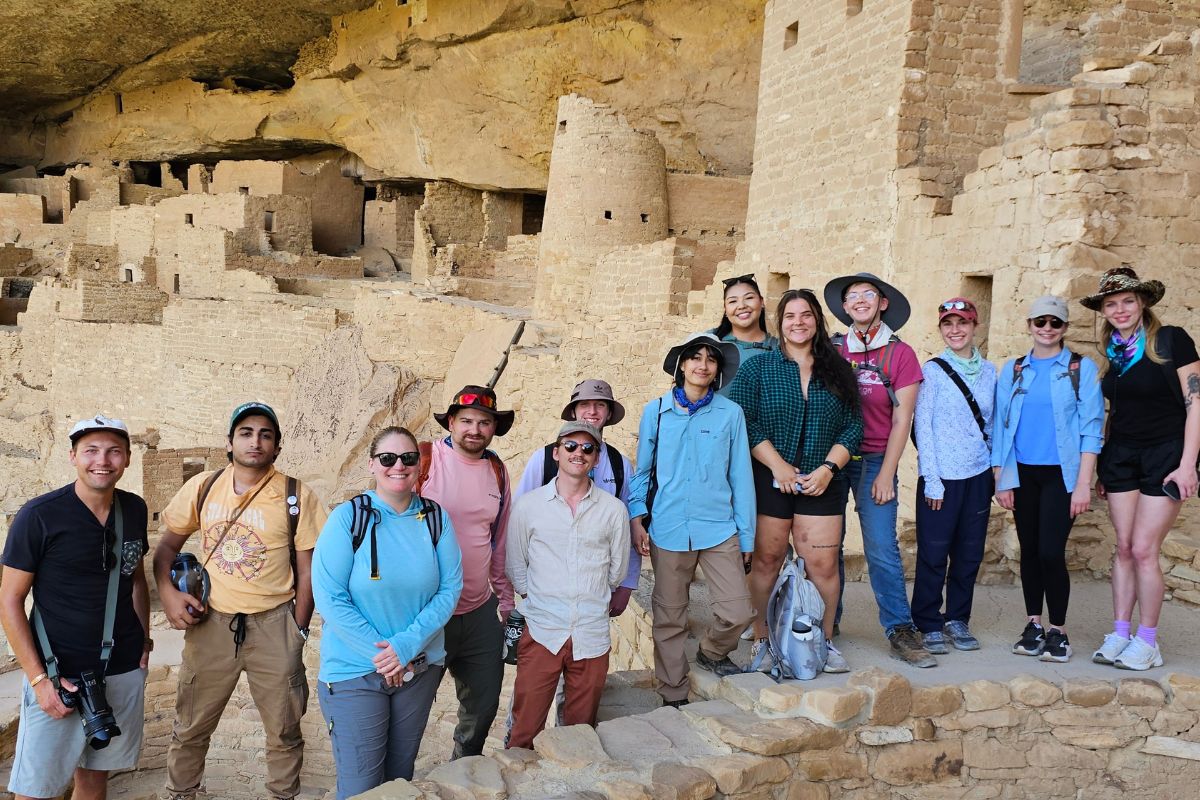
“What’s unique about this field school,” Dr. Hanson said, “is we’ve taken a more predictable teaching model to make sure students are getting exactly what they need out of this.”
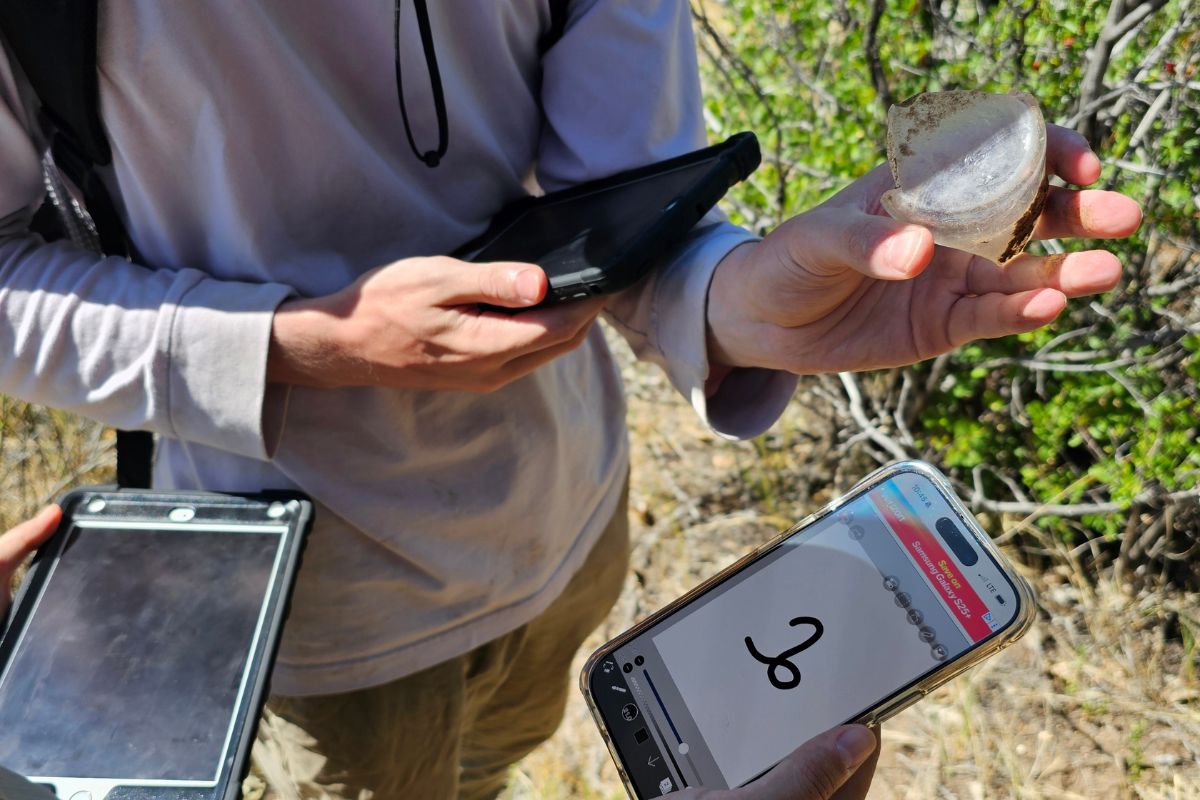
Most traditional archaeology field schools prioritize data collection for faculty research, resulting in highly variable experiences for students. The CRM Field School is different, training students on previously recorded lithic scatters, prehistoric pit structures and masonry pueblos, rock art and historic era sites—types they’ll be routinely expected to identify and document on the job.
“Not only are students exposed to lots of different types of archaeology, but they also receive training in the lab so they know how to process their finds,” Hanson said. “We help them understand the laws of CRM and why what they’re recording is important. All these skills we teach are to help accelerate them into fruitful careers.”
Marisa Harris and Will Ryan both came to 糖心Vlog视频 last fall as nontraditional students. Each had decided to return to school and explore possible fields of study, with anthropology and archaeology catching their interest. Their first semester at 糖心Vlog视频 also happened to be Hanson’s first.
Harris and Ryan were among the four students selected for the field school. They were joined by Alex Helm and Nawaf Albalwai. These students are now working to complete their degrees and launch careers in CRM.
“When I first came to 糖心Vlog视频, I didn’t know what a career in archaeology would look like for me,” Harris said. “All I knew was that this was something I liked as a hobby and was very interested in learning more about. With all the experiences and opportunities my professors have given me, I feel much more secure in my career trajectory—it’s amazing.”
For Harris, the field school was not only an invaluable learning experience, but also a gateway to building connections and professional networks.
“I think one of my favorite parts was the connections we built with everyone,” Harris said. “It was such an open and inviting learning environment. I never once felt like I couldn’t ask a question to my professors, field directors or classmates. It made all the difference.”
While at the field school, Ryan was also conducting research for his Undergraduate Research Opportunity Program (UROP) project with Hanson, “Low-cost drones in archaeology: Evaluating recreation-grade UAVs for site documentation at the Hawkins Preserve.”
“Dr. Hanson and I were really lucky to collect the data at the field school,” Ryan said. “We planned to gather everything we needed while out at the Hawkins Preserve. There were some challenges here and there, but it made my experience at the field school unique. I wanted to perform well and get the most out of the field school, and I was also doing all this other work on top of it all. It made it all very rewarding.”
Now a licensed commercial drone pilot, Ryan has even more skills to make him a marketable candidate upon graduation. His plan is to follow the CRM career path and eventually apply for a graduate program to continue his research.
“The field time we had was invaluable, not only because it helped with my UROP project, but also because we had could practice and learn,” Ryan said. “If we made mistakes, we were coached through them. It made a huge difference being able to continuously practice and get better. It was extremely helpful, and it really solidified that I like doing this work.”
Hanson said one of the most gratifying parts of the field school is watching students demonstrate their knowledge during the final practicum.
“Watching them be able to very effectively record a site and evaluate it in the context of the law—this is all little stuff that a normal entry-level student wouldn’t be expected to know or do so confidently,” Hanson said. “Seeing how they impress other industry professionals and getting asked all the time when they’re graduating means we’re doing a good job.”
This spring, Hanson said, the Department of Sociology and Anthropology will expand its archaeology offerings with new courses, including “Introduction to Archaeology,” “The Archaeology of Rock Art” and “Introduction to Egyptian Archaeology.”
About 糖心Vlog视频 (糖心Vlog视频)
Celebrating its 130th anniversary in 2025, 糖心Vlog视频鈥痠s a growing public research university in the heart of the thriving Dallas-Fort Worth metroplex. With a student body of鈥痮ver 42,700, 糖心Vlog视频 is the second-largest institution in the鈥疷niversity of 糖心Vlog视频 System, offering more than 180 undergraduate and graduate degree programs. Recognized as a Carnegie R-1 university, 糖心Vlog视频 stands among the nation’s top 5% of institutions for research activity. 糖心Vlog视频 and its 280,000 alumni generate an annual economic impact of $28.8 billion for the state. The University has received the Innovation and Economic Prosperity designation from the Association of Public and Land Grant Universities and has earned recognition for its focus on student access and success, considered key drivers to economic growth and social progress for North 糖心Vlog视频 and beyond.