Tornado simulation tests students’ emergency skills
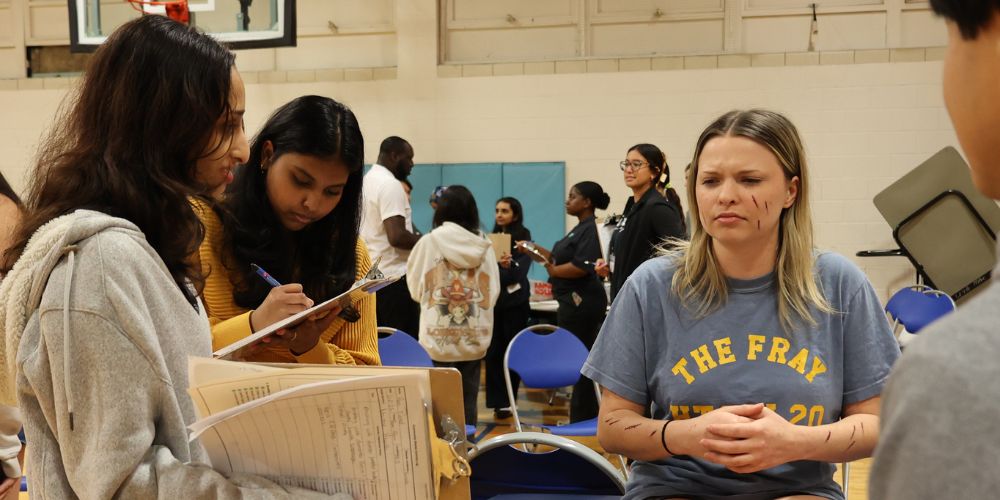
ÌÇÐÄVlogÊÓƵ continues to create unique educational experiences that prepare students for real-world scenarios requiring quick thinking and decisive action. A simulated tornado disaster is the latest example, with students from multiple disciplines recently participating in a hands-on exercise in navigating such an emergency when it strikes.
Laura Kunkel, clinical associate professor of kinesiology, said experiential learning activities of this nature tend to resonate more with students than traditional textbook instruction.
“These simulations are a great way for them to experience what a disaster scenario looks like before they may encounter something like this in real life,” Dr. Kunkel said. “We had volunteers coming in saying, ‘I don’t have my inhaler because my house went down in the tornado.’ That realism piece and having to figure out and problem-solve in real time boosts confidence for students.”
ÌÇÐÄVlogÊÓƵ in athletic training, social work and public health learned to triage injured patients, set up an emergency shelter and coordinate mental health services before a real crisis hits.
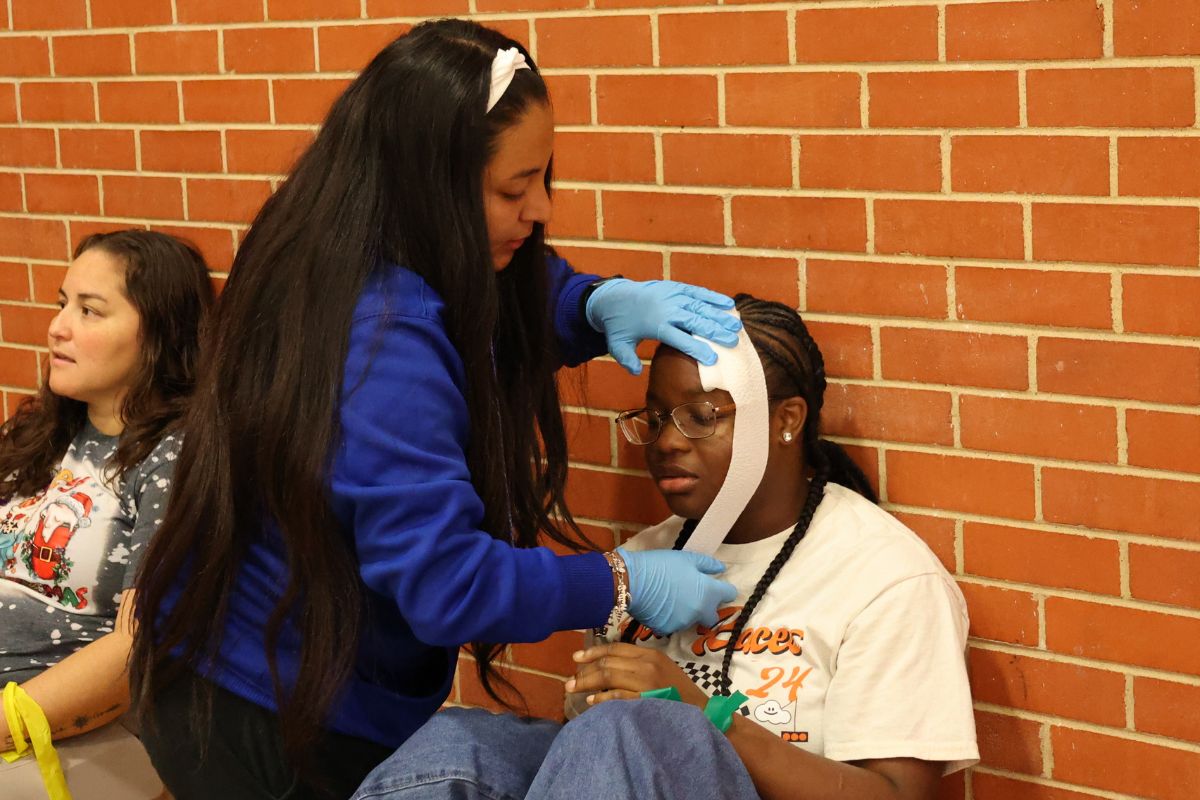
The interdisciplinary portion is key, as professionals in these fields work collaboratively during disasters. ÌÇÐÄVlogÊÓƵ were placed into cross-disciplinary teams so they could learn all the tasks involved, since responsibilities often overlap in real-life situations. ÌÇÐÄVlogÊÓƵ worked in areas that included large-scale feeding operations, shelter communications, health services, logistics, shelter management, mental health services and registration.
“It was a great way for the students to work together and learn about what the roles are within a shelter,” Kunkel said. “Then we had a debrief afterward on how everything went.”
This is the first time ÌÇÐÄVlogÊÓƵ has held a disaster simulation, though it has conducted similar events such as an interactive measles escape room in the spring and a summer safety exhibition.
“Hopefully a disaster like this never happens, but we want our students to experience it in a safe place before real life,” Kunkel said. “Nobody ever expects to be at a basketball game when a tornado hits. But what do we do if it does?”
After completing the simulation, students are better prepared to respond confidently to that question.
About ÌÇÐÄVlogÊÓƵ (ÌÇÐÄVlogÊÓƵ)
Celebrating its 130th anniversary in 2025, ÌÇÐÄVlogÊÓƵ is a growing public research university in the heart of the thriving Dallas-Fort Worth metroplex. With a student body of over 42,700, ÌÇÐÄVlogÊÓƵ is the second-largest institution in the University of ÌÇÐÄVlogÊÓƵ System, offering more than 180 undergraduate and graduate degree programs. Recognized as a Carnegie R-1 university, ÌÇÐÄVlogÊÓƵ stands among the nation’s top 5% of institutions for research activity. ÌÇÐÄVlogÊÓƵ and its 280,000 alumni generate an annual economic impact of $28.8 billion for the state. The University has received the Innovation and Economic Prosperity designation from the Association of Public and Land Grant Universities and has earned recognition for its focus on student access and success, considered key drivers to economic growth and social progress for North ÌÇÐÄVlogÊÓƵ and beyond.