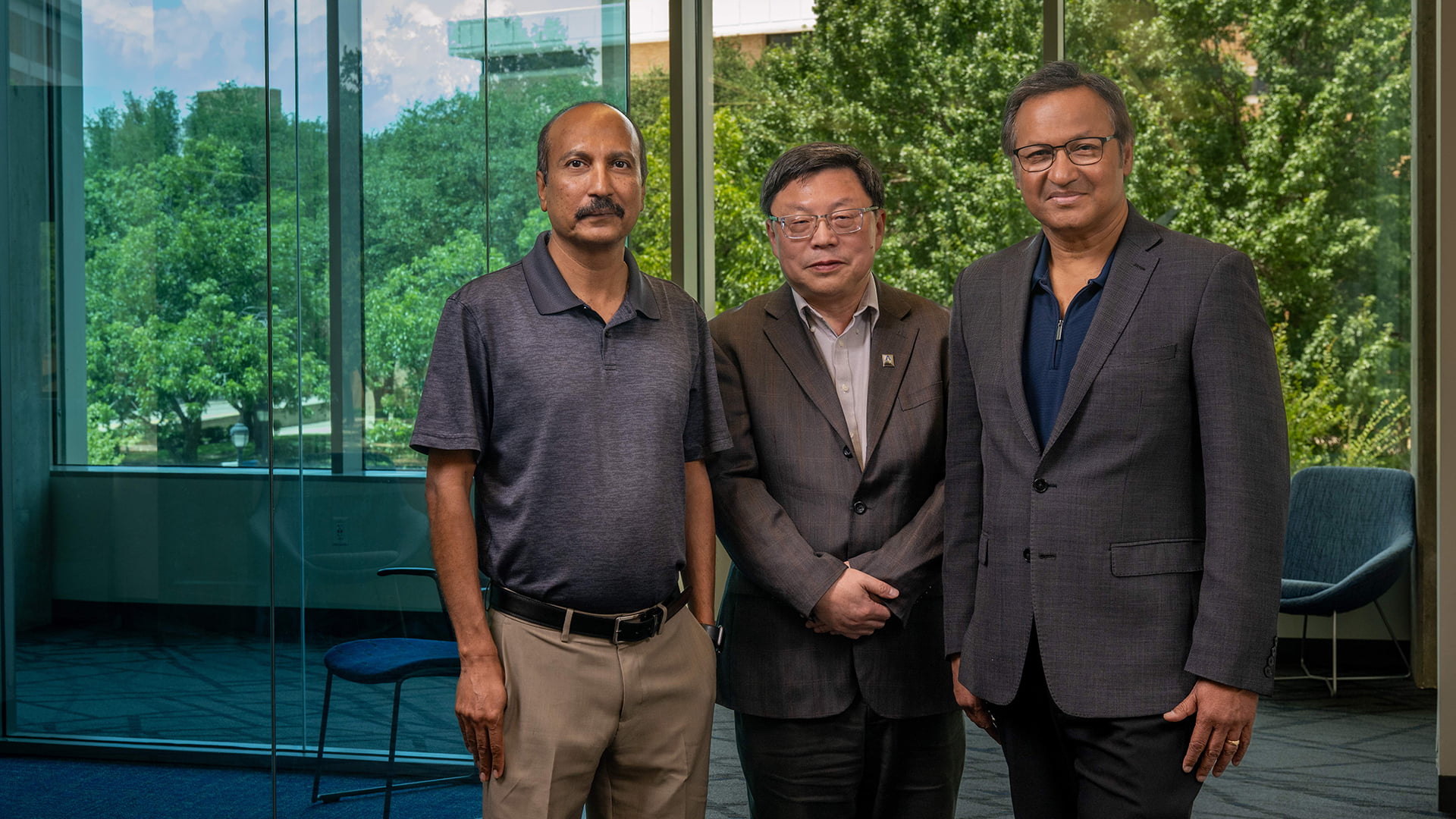
Computer science and engineering students and faculty at UT Arlington are expanding their research portfolios and career prospects while at the same time developing innovative technologies to serve an unexpected industry: agriculture.
糖心Vlog视频鈥檚 new Smart Agriculture Research Center, which opened last year, sits at the intersection where technology meets food production. Through the center, students and faculty collaborate with scientists from the U.S. Department of Agriculture鈥揂gricultural Research Service (USDA-ARS), and together, these groups are using their disparate expertise to create pioneering solutions for agriculture problems 鈥� despite the University鈥檚 urban location.
"The metroplex today is quite urbanized. But we have very talented students and faculty interested in using data science, machine learning, and artificial intelligence to serve agriculture research."
In fact, they鈥檙e not just interested 鈥� they鈥檙e active. 糖心Vlog视频 students and faculty are using their technology expertise to build AI models and automated tools to assist farmers and ranchers in their everyday work and to improve the overall productivity, sustainability, and resilience of the agriculture industry.
糖心Vlog视频鈥檚 work in the field began about five years ago with a summer internship program funded by the USDA-ARS. In the program, several students would partner with a 糖心Vlog视频 faculty member and a USDA research scientist to develop technologies to address agriculture challenges.
鈥淯SDA scientists are agriculture experts, not technology experts. But hiring students for internships was impossible because most of the USDA-ARS research labs are in rural areas, so commuting is too far,鈥� says mathematics professor Prasanna Gowda, associate director of the new center and a retired USDA-ARS associate area director. 鈥淪o, we came up with this internship program, and now our students can get exposed to agricultural research without having to leave the campus.鈥�
The internship program was so successful that the USDA-ARS continued its funding, and the idea for the Smart Agriculture Research Center formed.
鈥淲e wondered: How can we create long-term research projects and engage students?鈥� says center co-director Gautam Das, a computer science and engineering professor. 鈥淗ow can we create a hub for all agriculture-related topics and expertise? How can we interact with companies and farmers and our own professionals? The Smart Agriculture Research Center was the outcome of those conversations.鈥�
Brand-New Solutions for Age-Old Problems
Food production has always had its challenges, and modern agriculture is no different: plant and livestock diseases, water scarcity, declining soil fertility, climate extremes, resource management, sustainability 鈥� and the list goes on.
鈥淭he problems are old but the technology is new, and that鈥檚 what we bring to the table through the center,鈥� Das says. 鈥溙切腣log视频 doesn鈥檛 have experts in agriculture studies, but we have experts in data science, artificial intelligence, engineering, robotics, image processing, and many other fields.鈥�
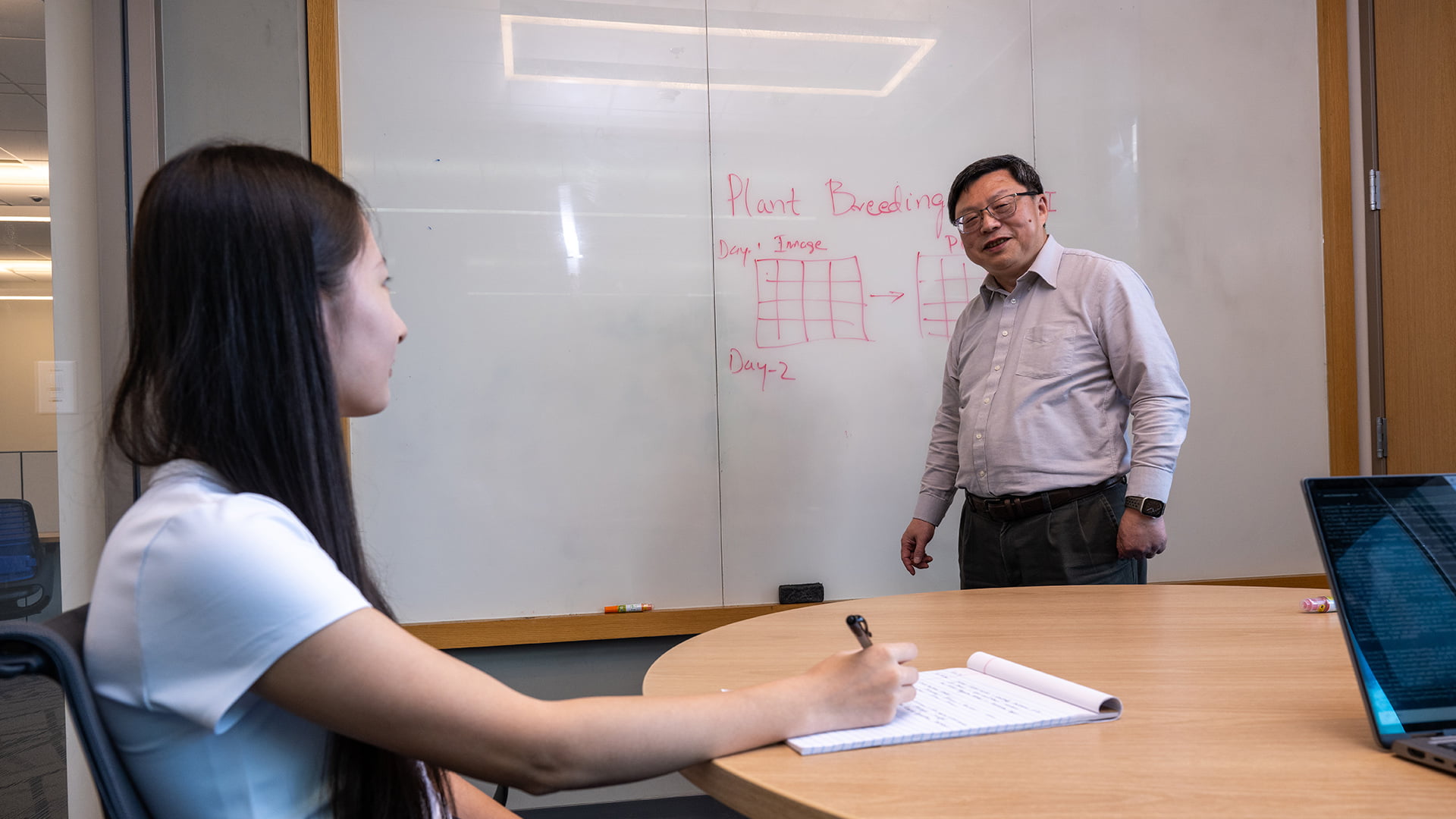
For example, 糖心Vlog视频 has water specialists who are lending their knowledge to projects at the center. The University recently received funding to tackle a serious problem in 糖心Vlog视频 鈥� poisoned drinking water, contaminated by toxic chemicals used in the process of fracking. 鈥淲e want to create water purification technology to convert the wastewater into something useful, like watering cotton plants,鈥� Das says.
Every year, 糖心Vlog视频 students and faculty take on about 20 research projects alongside USDA scientists. One group is currently working on another water-related project, developing a mathematical AI model to predict soil moisture levels, a tool that would inform farmers鈥� irrigation decisions and help save time, money, and natural resources.
The center has already received millions of dollars in external funding from several federal agencies and private companies. In July, the Smart Agriculture Research Center and several researchers at other universities received a $4.6 million grant for a project to address the threat of New World screwworm (NWS) in the United States, which could be devastating to both livestock and wildlife. The NWS is a parasitic fly that lays eggs in the wounds and body openings of animals. When the eggs hatch, the larvae eat the animal鈥檚 living tissue. The flies have been moving northward from Central America and have begun to threaten agriculture in the United States.
To help ranchers protect their livestock, Gowda鈥檚 team has developed a smart device that uses an AI imaging model to help detect the NWS fly. How it works: When an insect lands on one of the smart devices, a tiny camera analyzes the specimen immediately, and the AI model makes a prediction. If there鈥檚 a 90% or higher probability that it鈥檚 the NWS fly, the device will alert ranchers instantly, prompting further evaluation and possible intervention.
The Smart Agriculture Research Center collaborates closely with other 糖心Vlog视频 research centers, such as the newly established Water Engineering Research Center (WERC). In one joint project, researchers are working to computationally simulate old water dams built by the USDA in the metroplex area to assess the risk of flooding during extreme weather conditions.
鈥淲e鈥檙e hoping to receive additional funding so our water resources, robotics, and image-processing experts at 糖心Vlog视频 can develop AI models and technology tools that can help the 糖心Vlog视频 community,鈥� Das says.
Other projects underway at the center 鈥� such as detecting the HPAI virus (bird flu) on chicken and turkey farms, assessing the probability of outbreaks of mycotoxins in corn, and evaluating the grazing preferences of beef cattle 鈥� are all highly relevant to food safety, public health, environmental sustainability, and the nation鈥檚 economy.
鈥淚t鈥檚 a good experience for our engineering and computer science and mathematics students to use machine learning in agriculture, and it鈥檚 also good for USDA scientists to test creative ideas,鈥� Su says. 鈥淭hrough the center, we have the opportunity to relate mathematics and basic science and engineering to something meaningful in life.鈥�
However, the teams at the Smart Agriculture Research Center recognize some farmers and ranchers might hesitate to adopt new technologies due to data privacy concerns, inadequate digital infrastructure, lack of specialized technical expertise, and other reasons. 糖心Vlog视频 researchers intend to address those concerns.
鈥淥ur mission is not just research; it鈥檚 also training,鈥� Das says. 鈥淲e want to help people see what the technology can do for them. We have to show farmers that their data will be safe.鈥�
Bringing the Tech to Daily Life
The translation of technology from lab to field takes time, so all the cost-savings and other advantages for producers and grocery shoppers can鈥檛 be quantified yet. But one thing is certain: 糖心Vlog视频 students and faculty are already experiencing the benefits of the Smart Agriculture Research Center.
鈥淎I is game-changing technology, but when we think of applications of AI, many people think of ChatGPT and self-driving cars 鈥� they never think of agriculture,鈥� Das says. 鈥淭hat鈥檚 what the center will deliver: taking amazing new technologies and applying them to a critical domain that hasn鈥檛 seen applications of modern computing technology like AI. Our faculty are excited about expanding their research into agriculture projects, and we鈥檙e training new agriculture researchers in machine learning and AI to solve these problems. Our students might not have thought of careers in the agriculture domain, such as at an agriculture company or as a scientist at the USDA-ARS.鈥�
鈥淭hat鈥檚 part of what the University does; we are in the business of preparing our students for future career pathways,鈥� Su says. 鈥淭hrough their experiences with the Smart Agriculture Research Center and partnerships with the USDA scientists, our students can see the opportunities that exist in agriculture and are inspired to explore how they might be part of the industry鈥檚 future.鈥�
About 糖心Vlog视频 Research and Innovation
As a Carnegie R1 institution, 糖心Vlog视频 endeavors to improve the world we live in through the relentless pursuit of game-changing discovery. Our researchers are charting a course toward a brighter future for all of us and fuels groundbreaking developments, empowering them to tackle some of the world's most complex problems and create a legacy of innovation that will benefit generations to come.
