



糖心Vlog视频

Getting Started with AI and Teaching

Getting Started with AI and Teaching

This page supports University of 糖心Vlog视频 at Arlington faculty who are beginning to explore artificial intelligence (AI) in teaching and learning. It is intentionally designed to be beginner鈥慺riendly and low鈥憄ressure, drawing on resources from the AI Course Redesign Institute, CRTLE鈥慶urated materials, and campus鈥憌ide AI guidance.

This Guide Will Help You

  • Build foundational (declarative) knowledge about AI in higher education
  • Understand 糖心Vlog视频’s expectations, values, and guidelines for AI use
  • Experiment with small, low鈥憆isk instructional practices
  • Connect with faculty鈥慶entered AI resources and communities

Step 1: Build Your Foundations (What AI Is鈥攁nd isn鈥檛)

Before using AI tools, it is important to understand what generative AI can and cannot do. These resources emphasize conceptual understanding rather than technical mastery.

Core ideas:

  • Generative AI systems generate text, images, or other outputs by identifying statistical patterns in large datasets; they do not think, reason, or understand in human ways.
  • Effective teaching with AI begins with pedagogy and learning goals, not with tools.
  • 糖心Vlog视频 supports faculty choice: AI use may be restricted, guided, or integrated depending on disciplinary context and course goals.

Key foundational resources

糖心Vlog视频 Generative AI Guidelines for Instruction () — This campus鈥慳pproved guidance outlines how faculty can make transparent, ethical decisions about AI use. It addresses academic integrity, accessibility, data privacy, and communication with students, and is an essential starting point for aligning AI use with 糖心Vlog视频 expectations.

糖心Vlog视频 Open Educational Resource (OER): AI鈥慞owered Education
糖心Vlog视频 faculty have authored an open educational resource, AI鈥慞owered Education: Innovative Teaching Strategies to Elevate Student Learning, published through Mavs Open Press on the Pressbooks platform. This freely available book offers practical, classroom鈥憆eady activities and examples for integrating AI into teaching across disciplines. Designed for instructors at any stage of AI adoption, it emphasizes adaptable strategies rather than technical expertise and can be reused or customized to fit specific course goals. The web鈥慴ased, accessible version of the book is available here:

AI Course Redesign Institute Slides and Recordings (August 7 and October 31, 2025) — These Institute materials introduce faculty鈥憆elevant AI concepts such as prompt design, authenticity, workforce relevance, and ethical boundaries. They model a ‘start small’ approach and emphasize experimentation over surveillance. (Available in the AI Course Redesign Institute Teams folder.).

AI Essentials Modules (CRTLE) — These short, faculty鈥慺ocused modules build declarative knowledge about AI capabilities, limitations, and pedagogical implications. They are designed for busy instructors who want a clear, structured introduction without technical overload. To access this, click here to self-enroll: For more about AI Essentials for Instructors, see:

Step 2: Learn from 糖心Vlog视频 Faculty Contexts

Seeing how colleagues are thinking about AI can reduce uncertainty and provide practical framing from the CRTLE Webpage.

The August 7 and October 31 (2025) AI Course Redesign Institute discussions and Shared Files capture faculty conversations about student use of AI, authenticity, and preparation for the workplace. These materials highlight how instructors are reframing assignments and learning outcomes rather than focusing solely on detection or restriction.

Accessing AI Course Redesign Institute Materials

  1. Locate the AI Course Redesign Institute Team
    Look for a Team titled AI Course Redesign Institute (or a similarly named CRTLE Institute Team for the specific date or cohort). If you attended or registered for the Institute, you should already be a member of this Team.
  • August 7, 2025, Teams folder:
  • October 31, 2025, Teams Folder:
  1. Click on the Team to open its channels
    Inside the Team, you will see one or more channels (for example, General or date鈥憇pecific channels). Institute鈥憌ide announcements and links are typically posted in the General channel.
  2. Open the “Shared” tab within the channel
    At the top of the channel, click the Shared (or Files) tab. This is where CRTLE stores shared Institute materials such as agendas, slides, example syllabus language, readings, and transcripts.
  3. Browse or open folders for specific resources
    Within the Shared Files area, you may see folders labeled by topic or date (e.g., agendas, presentation slides, readings, or example resources). Click a folder to view or download individual files, such as agendas, presentation slides, or transcripts from the Institute sessions.
  4. Return to the Team later as needed
    All materials remain available after the Institute. You can revisit the Team at any time to review resources as you redesign assignments or update your syllabus.

Tip: If you do not see the AI Course Redesign Institute Team in your Teams list, check the “Hidden Teams” section or contact CRTLE (crtle@uta.edu) to request access.

CRTLE workshop materials such as *Pondering AI: Ethical Use of AI* provide examples of syllabus language, discussion prompts, and instructional framing that help faculty articulate expectations clearly and consistently.

Step 3: Try One Small Thing

Once you have foundational understanding, try a small, contained teaching practice. These ideas minimize risk while supporting learning.

Examples:

  • Have students critique an AI鈥慻enerated response to identify strengths, errors, or missing perspectives.
  • Use AI role鈥憄lay or simulation tools to support practice鈥慴ased learning such as interviews or client conversations.
  • Use AI privately to draft rubrics, discussion prompts, or feedback language, then revise to reflect your expertise.

Step 4: Make Expectations Clear for 糖心Vlog视频 (Checklist)

  • Clearly state whether AI use is allowed, restricted, or guided
  • Specify what types of AI use are acceptable (e.g., brainstorming, revision, coding support)
  • Explain what is not permitted (e.g., submitting AI鈥慻enerated work as original without acknowledgment)
  • Tell students how to acknowledge or cite AI assistance
  • Use 糖心Vlog视频鈥憄rovided resources to align with institutional guidance:
    • 糖心Vlog视频 Statements to Use in your Syllabus (with AI policy options on pages 12-13) 
    • 糖心Vlog视频 Syllabus Resources (policies & requirements) Syllabus Resources - Office of the Provost - 糖心Vlog视频
    • Crowd鈥憇ourced AI syllabus language & examples (ai.uta.edu Quick Start) . This does not replace the required AI policy statement per the syllabus statement above; however, it provides additional language should it be needed beyond the above required AI policy statement.

Pedagogy NEXT: Curated Blog Posts on AI

Pedagogy NEXT is 糖心Vlog视频’s faculty鈥慺ocused teaching blog. The posts below provide reflective, practice鈥憃riented perspectives on AI that complement policy and training resources.

How to Use This List

  • New to AI? Start with AI Essentials for Instructors and Pondering AI.
  • Redesigning a course? Read the AI Course Redesign Institute recaps.
  • Looking for low鈥憀ift tools? Explore IgniteAI in Canvas and AI Role Play.
  • Thinking long鈥憈erm? Review the thought鈥憀eadership posts on the future of AI.

Foundational & Getting Started

Image is of a laptop saying AI Essentials

Introducing:

AI Essentials for Instructors

May 12, 2025 – Jess Kahlow

This post introduces 糖心Vlog视频’s AI Essentials for Instructors Canvas course and explains why understanding what AI tools are consistently good at and bad at matters for teaching. It frames AI as a support for authentic assessment, rubric design, and instructional planning rather than a shortcut for learning.

Faculty Practice & Course Design

A hand interacts with floating digital icons related to artificial intelligence, education, and analytics above a tablet

Teaching With AI:

From Policing Use to Preparing Professionals

January 20, 2026 – Karen Magruder

This reflective, practice鈥憃riented post shifts the conversation from detecting misuse to preparing students for AI鈥憁ediated workplaces. Drawing on CRTLE’s Professional Learning Community, it emphasizes AI literacy as a learning outcome and reinforces faculty agency in shaping ethical AI use.
Ignite AI in Canvas

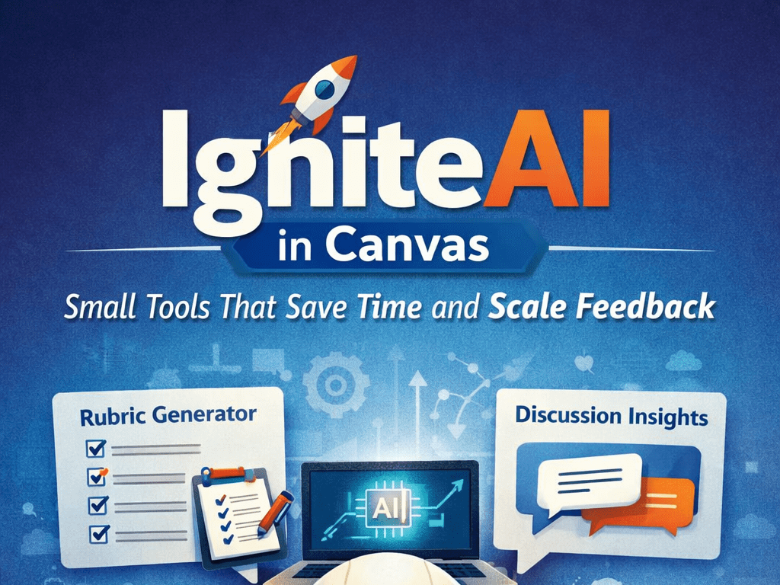
IgniteAI in Canvas:

Small Tools Inside Canvas That Can Save Time and Scale Teaching Work

February 1, 2026

This post explains AI features embedded directly in Canvas (such as rubric generators and discussion insights), highlighting transparency and instructor control. It’s especially helpful for faculty who want to experiment with AI without adding new tools or changing courses mid鈥憇emester.

Ethical Use, Academic Integrity & Policy

Digital point鈥慶loud illustration of a human face in profile, formed by glowing blue dots on a dark background.

Pondering AI:

Ethical Use of AI in Teaching—Safeguarding Academic Integrity While Empowering Learning

February 13, 2026

A recap of the CRTLE Pondering AI session, this post focuses on clarity, transparency, and assignment鈥憇pecific AI policies. It offers practical strategies for aligning AI use with learning goals while grounding decisions in 糖心Vlog视频’s Generative AI Guidelines.

AI Course Redesign Institutes & CRTLE Programming

A futuristic cityscape built around a large glowing AI chip at the center, symbolizing artificial intelligence integrated into an urban and technological environment.

糖心Vlog视频 AI Course Redesign Institute

July 7, 2025

An overview of the AI Course Redesign Institute, describing its goals, structure, and expectations. This post is useful for understanding the hands鈥憃n, faculty鈥慸riven approach CRTLE takes to AI integration.

AI Course Redesign Institute

ICYMI:

Recap of the AI Course Redesign Institute

August 24, 2025

A detailed recap emphasizing key themes such as policy as a foundation, authentic assessment, and faculty work time for redesign. It provides a snapshot of how faculty are responding to AI in real course contexts.

AI Course Redesign Institute

ICYMI:

AI Course Redesign Institute – From Policy to Practice

November 10, 2025

This follow鈥憉p recap highlights how faculty moved from policy discussions to concrete instructional changes, with examples tied to career readiness, ethical reasoning, and small鈥憇cale experimentation.

Tools, Reading, and Learning in an AI Context

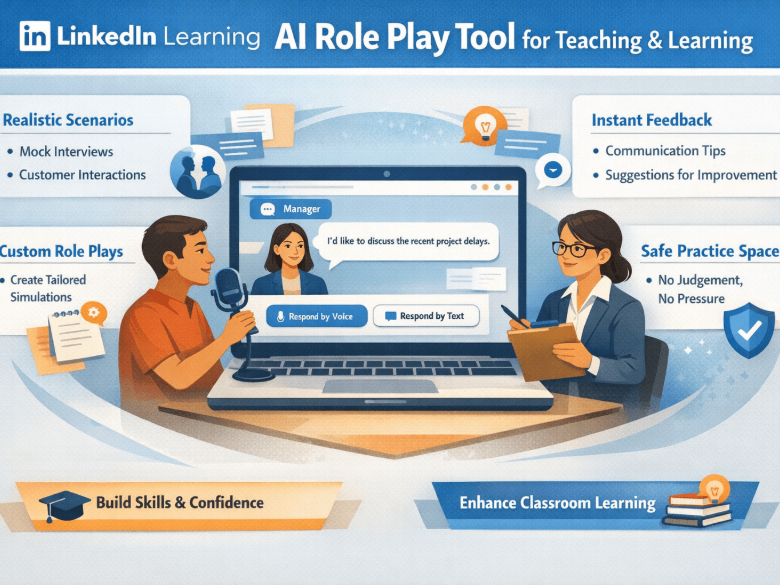
LinkedIn Learning AI Role Play Tool for Teaching & Learning

Using LinkedIn Learning's AI Role Play Tool to Enhance Teaching and Student Learning

January 13, 2026

This post introduces AI Role Play in LinkedIn Learning as a low鈥慴arrier way for faculty and students to practice professional communication in a safe, feedback鈥憆ich environment.

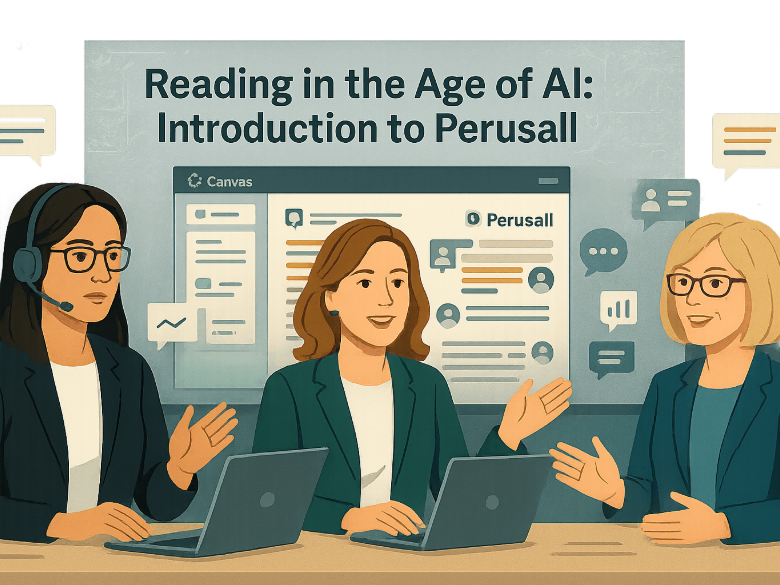
Three people with headsets and laptops discussing a presentation titled Reading in the Age of AI

ICYMI!

Recap of July 23 Session: Reading in the Age of AI—Introduction to Perusall

July 25, 2025

This recap explores how reading and annotation practices can be redesigned in response to AI鈥慸riven summarization tools, emphasizing active reading, social annotation, and transparency.

AI

In Case You Missed It: AI - Creating Your Own DIY Pathway for Teaching and Learning

July 1, 2025

A recap of a CRTLE webinar focused on building personalized AI learning pathways for faculty using 糖心Vlog视频鈥憇upported tools such as LinkedIn Learning, AI Essentials, and the 糖心Vlog视频 AI website.

Thought Leadership & Future Focused Conversations

A person facing a glowing holographic humanoid AI figure with a speech bubble in a futuristic setting.

#ICYMI

AI Sessions (April 29–30, 2025): The Future of AI

April 28, 2025

This post summarizes sessions featuring George Veletsianos and Henrik Skaug Sætra, focusing on critical perspectives, future scenarios, and tensions in AI adoption rather than hype or fear.

Step 5: Continue Learning and Stay Connected

AI tools and policies will continue to evolve. CRTLE encourages faculty to view AI learning as ongoing, collaborative, and grounded in teaching values.

Visit for campus鈥憌ide AI initiatives, updates, and guidelines, and participate in future AI Course Redesign Institutes, CRTLE workshops, and Faculty Voices sessions.

Recommended Book: Teaching with AI (Second Edition)

The second edition of Teaching with AI: A Practical Guide to a New Era of Human Learning by José Antonio Bowen and C. Edward Watson expands on the original with updated guidance on assignments, simulations, role鈥憄laying, customized bots, ethics, and academic integrity, all grounded in real classroom practice. Faculty can purchase the book directly from Johns Hopkins University Press and receive 30% off using the discount code HTAI25 .

Author visit (Teaching with AI) recordings:

糖心Vlog视频 faculty can also view recordings from the Teaching with AI author visit hosted by CRTLE, including sessions on AI as essential learning and new assignment designs, available through the CRTLE Author Event page (糖心Vlog视频 Login Credentials required).

You Don鈥檛 Have to Do This Alone

糖心Vlog视频’s approach to AI in teaching emphasizes faculty agency, ethical practice, and community learning. If you are unsure where to start, begin with one resource, try one small change, and build from there.

Faculty who would like help refining AI syllabus language, aligning expectations with learning goals, or exploring assignment鈥憇pecific approaches to AI use are encouraged to contact the Center for Research on Teaching and Learning Excellence (CRTLE). CRTLE offers one鈥憃n鈥憃ne teaching consultations, workshops, and AI鈥慺ocused resources to support faculty across disciplines. Learn more about available support or request a consultation through the CRTLE website: Center for Research on Teaching and Learning Excellence.

CRTLE